
TIMELY UPDATES: The "Offensive" Shift: UAE Loses Patience and Acts on It.
The UAE is ditching "defense" for "offense" after 1,000+ Iranian strikes. See WHAT it means.

Welcome to Save Time with YMagnify.com.
The publication that simplifies complex headlines and financial data, so that you can Save Time and focus on making the best decisions for your trades and investments.
Online noise, screaming headlines, useless panic - they are all meant to play with our mind and to affect the decisional process. Don’t let that get to you.
Understand just what matters from all that noise. It’s made by a real certified economist and market analyst for busy people everywhere. Educational purpose. Check disclaimers. Subscribe to this publication for simplified complex knowledge. Find everything you get by subscribing, HERE (fully FREE right now).
Let’s dive in.
TL;DR: The UAE is ditching “defense” for “offense” after 1,000+ Iranian strikes. While Tehran reaches out to the CIA for a desperate off-ramp, Russia has cut the grain supply and Ayatollah Sistani has condemned the war. From the Burj Al Arab to Baghdad, the Middle East is no longer just on the brink, it’s tipping. Here’s how a local conflict became a global crisis in under 120 hours.
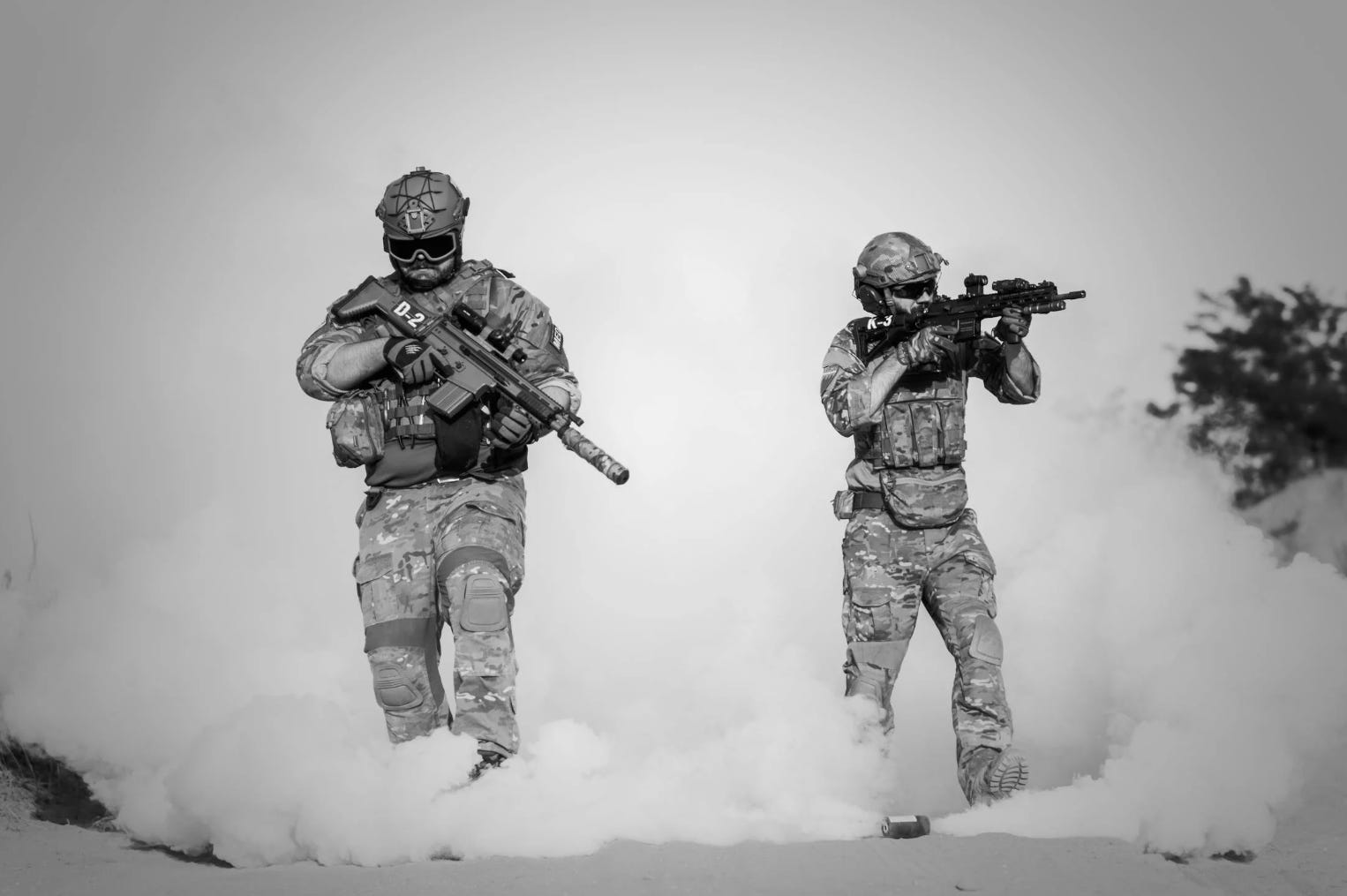
Five days into Operation Roaring Lion (Israel) and Operation Epic Fury (USA). The targeted killing of Supreme Leader Ali Khamenei on February 28 sent shockwaves through the global order.
A new front: the UAE under pressure
The United Arab Emirates has tried to remain outside the direct conflict between Iran and the U.S.–Israel coalition. That position is now under strain.
According to official UAE statements, the country has faced more than 1,000 Iranian missile and drone attacks since February 28. Defense officials say most were intercepted, but the scale alone is unprecedented.
As of March 4, the UAE reported detecting:
189 ballistic missiles
941 drones
3 cruise missiles
Despite heavy interception success, the attacks have caused casualties. Three civilians from Pakistan, Nepal, and Bangladesh were killed and 68 people were injured, mostly by falling debris.
Several strikes landed near prominent civilian areas. Missiles or drones hit zones close to Palm Jumeirah, Zayed International Airport, and the Burj Al Arab, while an Iranian drone struck the U.S. consulate in Dubai on March 3, starting a fire that was quickly contained.
Diplomatically, the UAE summoned Iran’s ambassador and demanded the attacks stop immediately.
Until now, Abu Dhabi insisted it had not allowed its territory, waters, or airspace to be used for attacks against Iran, maintaining a neutral stance consistent with UN principles.
But officials signaled that restraint has limits.
Minister of State Reem Al-Hashimy said the UAE is prepared to defend itself if necessary, warning that if attacks continue the country may shift toward a more forceful response.
For markets, that matters. The UAE sits at the center of Gulf finance, aviation, and energy logistics. When a state like that starts discussing offensive options, escalation risk rises.
A brief diplomatic signal
At the same time, another headline briefly calmed markets.
According to a New York Times report, operatives linked to Iran’s Ministry of Intelligence signaled through a third country that Tehran may be open to talks with the CIA to end the five-day war.
The message was informal and indirect, but it was enough to move markets.
U.S. equity futures reversed earlier losses.
S&P 500 and Nasdaq 100 futures gained roughly 0.4%, while Dow futures rose around 0.2%.
The VIX volatility index dipped after several days of gains.
Oil prices also eased slightly. Brent crude fell more than 2% after the report.
But the optimism lasted only briefly.
Analysts quickly warned that the signal should be treated cautiously. Iranian officials had simultaneously rejected negotiations publicly, and President Donald Trump said any Iranian attempt to talk had come “too late.”
In other words, the diplomatic channel exists, but it is fragile.
Prediction markets currently place only about a 2% probability on a ceasefire before mid-March, highlighting how little confidence investors have in a quick resolution.

A region reacting beyond governments
The conflict is also spreading politically and socially across several countries.
Iraq’s most influential Shia cleric, Grand Ayatollah Ali al-Sistani, condemned the war and warned that launching a full-scale attack against another UN member state sets a “dangerous precedent.” His statement called on Muslims and international actors to oppose the war and push for a peaceful resolution.
Public protests followed across multiple countries.
In Baghdad, demonstrators attempted to storm the fortified Green Zone housing the U.S. embassy.
In India, large protests and candle marches took place in more than a dozen regions, including Delhi and Jammu and Kashmir.
Demonstrations also erupted in Pakistan, where clashes near the U.S. consulate in Karachi reportedly turned deadly.
These reactions matter less for immediate trading but more for political stability. Wider protests increase pressure on governments and raise the risk that more actors get pulled into the crisis.
Russia stepped in. Economic stress emerging inside Iran.
Beyond the military situation, economic pressure is now visible inside Iran.
Russia has suspended grain shipments to Iran by sea, including deliveries through the Black Sea and Caspian routes. Export companies cited rising freight costs, insurance premiums, and payment difficulties caused by the war.
This is significant because Iran is one of the largest buyers of Russian wheat and grain. Between July 2025 and February 2026, the country imported nearly 6 million tons of grain from Russia, roughly double the previous year.
Kazakhstan, another major barley supplier, has also halted exports. Meanwhile Iran’s key Caspian receiving port, Amirabad, has stopped accepting cargo.
These disruptions are beginning to show up domestically. Food prices for staples like rice and potatoes have reportedly risen sharply, and the government has suspended food exports to secure domestic supply.
Iran already entered the conflict with inflation above 46%, meaning supply shocks can translate quickly into shortages and social pressure.
What markets are really watching
Despite the geopolitical noise, traders are focusing on a few key transmission channels.
The first is oil. The Strait of Hormuz remains one of the most important energy chokepoints in the world. Any perception of sustained disruption forces a risk premium into crude prices.
If oil remains elevated, inflation expectations rise and central banks become less comfortable cutting rates.
The second is risk sentiment. Safe-haven assets like gold and the U.S. dollar tend to gain when geopolitical uncertainty rises, while equity markets often become more sensitive to interest-rate expectations.
The third is regional stability. The Gulf’s economic model relies heavily on being seen as stable ground for capital and business. Missile strikes near major infrastructure challenge that perception.
If Gulf states were drawn more deeply into the conflict, markets would begin pricing a broader regional security risk.
The bigger picture
This war has already changed the strategic environment.
The strikes that began the conflict killed Iran’s Supreme Leader Ali Khamenei and destroyed more than 1,700 installations inside Iran, according to reports. Shipping through the Strait of Hormuz has already been disrupted.
At the same time, diplomatic signals suggest neither side has a clear off-ramp yet.
That combination, military escalation with weak diplomatic channels - is exactly the type of environment that creates persistent volatility in markets.
Right now, markets are balancing two forces.
On one side, the conflict is expanding geographically. The UAE is under attack, protests are spreading across several countries, and economic disruptions inside Iran are growing.
On the other side, fragile diplomatic signals suggest some actors are still searching for a way to stop the escalation.
For traders and investors, the real focus should remain on the transmission channels: oil prices, inflation expectations, and global risk sentiment.
If energy markets stabilize, the war may remain a contained geopolitical shock.
If energy supply or shipping disruptions deepen, the conflict could begin shaping the global macro environment in a much larger way.
That is the line markets are watching.
Right now, this is still a geopolitically driven volatility event.
It becomes a macro regime change only if oil and inflation shocks persist.
The “Regime Change” Trap
We are currently in the most dangerous phase of any war: The Transition.
The U.S. and Israel have achieved their initial military goals, Khamenei is gone, the IRGC headquarters are rubble, and the Iranian Navy is effectively non-existent in the Gulf of Oman.
However, by pushing for “regime change” (as Trump’s TruthSocial posts suggest), the coalition has backed the Iranian remnants into a corner where they have nothing left to lose but to lash out at the UAE and Saudi Arabia.
The “peace talks” via the CIA are likely a stall tactic by an Iranian leadership in total disarray, but the coalition is playing a high-stakes game.
If they don’t provide a “golden bridge” for the remaining Iranian generals to retreat across, the UAE’s shift to an offensive posture won’t just be a warning, it will be the start of a decades-long regional war that no amount of missile defense can truly win.
The Bottom Line: Watch the bread prices in Tehran and the “offensive” movement of UAE F-16s.
If the grain doesn’t start moving and the drones keep falling on Dubai, the window for a “short war” will slam shut by next week.
Thanks for reading. If you believe this saved you a headache from watching countless noisy headlines, then you are in the right place.
See you soon. Stay focused. Subscribe to this publication.
Stay prepared. We grow together,
Yuna, YMagnify.com
Website: https://ymagnify.com
X / Twitter: https://x.com/ymagnifycom
Substack: https://substack.com/ymagnifycom
Spotify PODCAST: Rushing Simplified News for Busy Investors
YouTube: YMagnify’s official YouTube
If you’re as intrigued as I am, don’t miss out on deeper dives like this.
Subscribe to my Substack at https://substack.com/ymagnifycom for exclusive insights, become a member for future premium analyses.
Stay prepared. We grow together,
Yuna, YMagnify.com
*Disclaimer: This content is for educational and informational purposes only. It is not financial, investment, tax, or legal advice. Markets involve risk, and you are solely responsible for your decisions. Always do your own research and decisions before acting.
Trump has hinted so hard at regime change (he also started the present campaign after the Iranian revolts of early January) that when no regime change occurs, it will be seen as a victory for the Iranian regime and a defeat of the USA.
Meanwhile, the USA and the world is incurring a heavy cost and at this time I still don't see a reliable pathway to regime change in Iran.
And this is discounting the question what will follow after the fall of the regime.