
Time-Sensitive Updates: USA-ISRAEL-IRAN. Markets Reprice Risk.
What just happened? Is World War starting? Updates below

Welcome to Save Time with YMagnify.com.
The publication that simplifies complex headlines and financial data, so that you can Save Time and focus on making the best decisions for your trades and investments.
Online noise, screaming headlines, useless panic - they are all meant to play with our mind and to affect the decisional process. Don’t let that get to you.
Understand just what matters from all that noise. It’s made by a real certified economist and market analyst for busy people everywhere. Educational purpose. Check disclaimers. Subscribe to this publication for simplified complex knowledge. Let’s dive in.
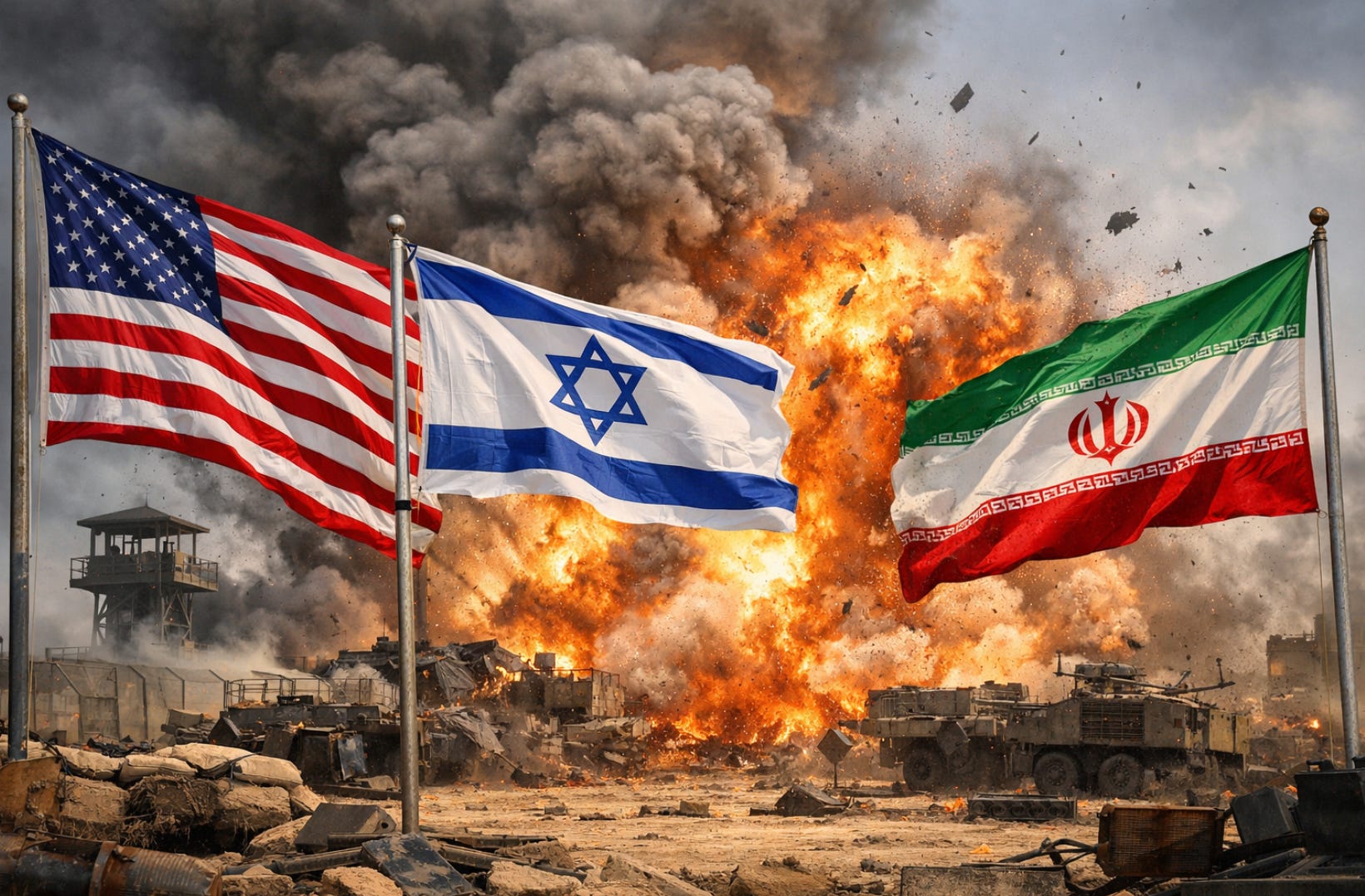
Quick recap: what changed this weekend
Markets Reprice Risk as the Strait of Hormuz Crisis Escalates
From oil premium to broader volatility - what’s happened since the initial headline and where traders should pay attention now
The energy risk premium that had been building finally moved from background noise into the foreground of markets.
Since the conflict around the Strait of Hormuz intensified at the end of February, markets have been reacting not just to headlines but to real shifts in supply flows, shipping risk, and asset pricing.
Oil prices have spiked, safe-haven assets rallied, and some regional markets have even halted trading. For anyone positioned around macro drivers, energy, rates, equities, FX, the unfolding sequence matters deeply.
Here’s where things stand and what it means for positioning.
What has happened since the Strait of Hormuz story
The crisis that began with strikes on Iran and subsequent retaliations has now had measurable effects on energy markets and broader trading behavior.
Oil prices surged sharply as shipping through the Strait of Hormuz, a route for about 20 percent of global seaborne oil was effectively disrupted.
Brent crude jumped as much as 13 percent and crossed the $80 per barrel mark, its highest since mid-2024. U.S. benchmark WTI also spiked, with intraday highs above $75 per barrel before paring gains later in the session.
The rise reflected not only headline shock but tangible disruption to tanker movements and insurance risk premiums around the chokepoint.
This wasn’t a one-day event.
Prices earlier last week had already been trending higher in anticipation of escalation, putting both Brent and WTI at multi-month highs even before the weekend conflict widened.
Some regional equity markets have halted trading entirely, such as the Abu Dhabi and Dubai exchanges pausing activity to manage heightened volatility and preserve stability.
And the shipping and logistics side shows real consequences: many traders and carriers are rerouting tankers around Africa’s Cape of Good Hope, adding time and cost to deliveries that previously moved through Hormuz.
Why markets care beyond the headlines
A few clear patterns have emerged in price behavior and positioning that traders should acknowledge.
Oil is acting like a true macro driver again.
When crude is at risk of sustained disruption, its influence feeds into inflation expectations, currency flows, and real rates. Risk premia in oil are now being factored into bond yields and equity valuations in a way that wasn’t present before the crisis widened.
Safe-haven assets have real footing.
Gold and U.S. Treasuries have bid support because the price action isn’t just speculation, it’s a real repricing of geopolitical risk. This flows into how portfolios hedge risk, not just how they chase upside.
Regional market behavior matters.
When equity markets in the Gulf close or deploy trading halts, that’s not noise, that’s direct evidence that localized risk is penetrating financial infrastructure. Traders tracking FX, emerging market flows, and global risk sentiment need to treat these developments as structural, not transitory.
None of this is guesswork. These are observed price moves and real operational consequences, supported by how indexes, commodities, and capital flows are adjusting.
What traders and investors should pay attention to now
This phase of the crisis is about spread, persistence, and correlation, not isolated volatility spikes.
Here’s what to watch*:
1. Oil price behavior around key levels.
Breakouts above structural resistance, such as sustained closes above the $80/barrel level for Brent, signals the risk premium is embedding into broader inflation expectations. Conversely, failure to sustain these levels suggests volatility without structural repricing.
2. Yield curves and real rates.
If bond markets begin shifting back toward higher real yields because markets see inflation risk from energy rising, this can compress equity multiples and shift risk assets lower even without new headlines.
3. Safe-haven demand vs. risk assets.
Gold, U.S. Treasuries, and select FX (e.g., JPY, CHF) gaining while risk assets weaken reflects a classic risk-off regime. Watch the correlations: if they strengthen materially, traders need to treat this as a regime change, not short-term fear.
4. Shipping and logistics data.
If vessel traffic through Hormuz remains low and reroute times remain high, this genuinely tightens the supply channel. That’s a macro inflation story, not just geopolitical tension.
5. Regional capital flows.
UAE market closures and broader Middle Eastern financial disruptions are signals, not outliers. They reflect investor behavior under stress and should factor into risk models.
Practical positioning cues*
This environment favors methodical risk sizing, clearly defined scenarios, and volatility-aware strategies.
If prices hold above key oil technical levels with meaningful breadth and duration, a shift toward energy exposure and inflation hedges becomes defensible.
If yields rise alongside oil and equities diverge structurally on volatility, risk-off allocations have more justification.
Traders should differentiate between headline reaction trades and macro repricing trades.
The former fades as news cycles move; the latter persists and influences economic barometers like inflation, rates, and corporate margins.
Where we stand now
The crisis is no longer in the speculative category, it has measurable price consequences.
Oil has broken multi-month ranges and extended a geopolitical premium into real pipeline risk.
Regional market closures highlight that financial and physical infrastructure are adjusting to persistent instability.
Macro variables like inflation expectations and yield repricing are beginning to reflect energy risk, not just economic data.
This is the phase where traders and investors stop reacting and start integrating these drivers into structural positioning.
Bottom line: this is a geopolitically driven volatility event that can morph into a macro regime change if oil and inflation shocks persist.
For traders, the edge is in positioning around risk premia and policy repricing, not trying to forecast the next event.
Thanks for reading. If this motivates you or if this is a harsh truth that brings you discomfort but determination, then you are in the right place.
See you soon. Stay focused. Subscribe to this publication.
Stay prepared. We grow together,
Yuna, YMagnify.com
Website: https://ymagnify.com
X / Twitter: https://x.com/ymagnifycom
Substack: https://substack.com/ymagnifycom
Spotify PODCAST: Rushing Simplified News for Busy Investors
YouTube: YMagnify’s official YouTube
*Disclaimer: This content is for educational and informational purposes only. It is not financial, investment, tax, or legal advice. Markets involve risk, and you are solely responsible for your decisions. Always do your own research and decisions before acting.